The Role of AI in Business Decision-Making: Smarter Strategies for 2025
Artificial Intelligence (AI) is not something to be used in the future. It will already be revolutionizing “how companies operate, grow & compete by 2025.” Companies today face more data, more competition, and more urgency to decide intelligently than ever before. AI in business allows leaders to analyze data at a level that no human can ever hope to match.
This blog will explore how the advent of AI is changing decision-making in business. We will examine the ways artificial intelligence strategy is helpful, how AI can help start-ups, and how business automation enhances business efficiency. Along the way, we will reference articles from reliable sources such as McKinsey and Harvard to present the realities of AI’s impact on the workplace.
Why AI Matters in Business Today
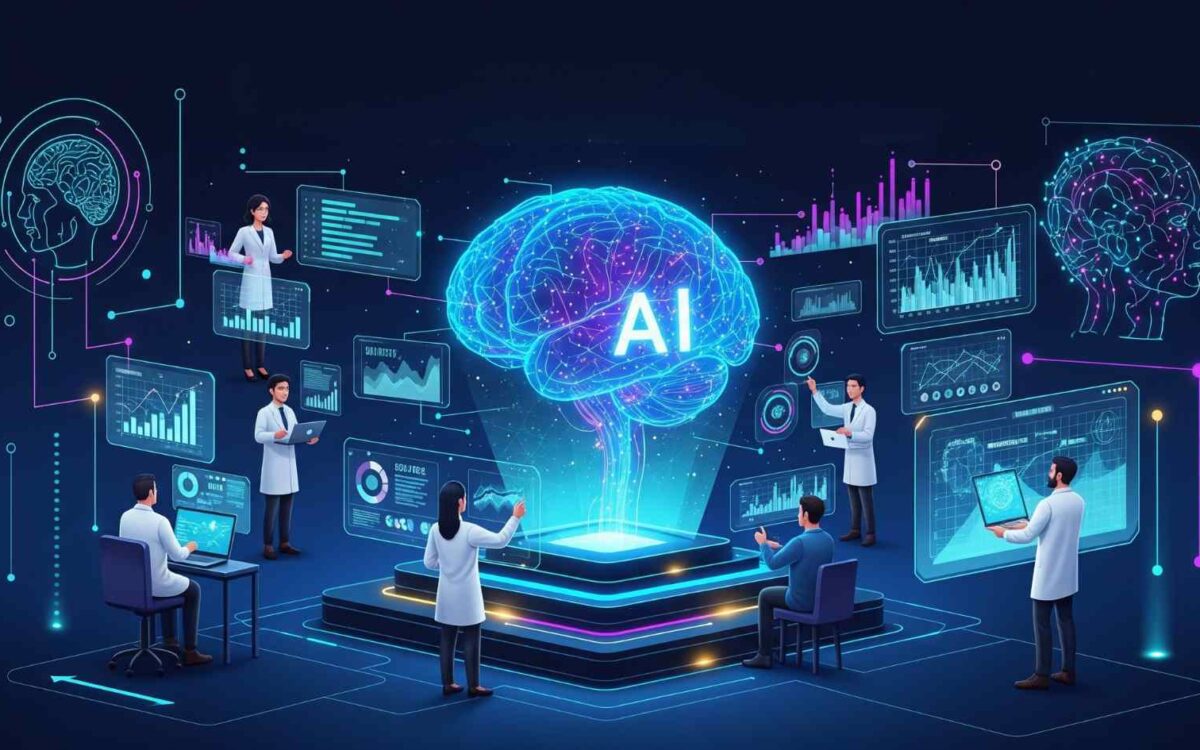
Every business wants to make the best choices. But in a time of too much data, this is not easy. Markets are quick, clients want more, and errors cost money. This is where AI in business helps. Instead of guesswork or relying only on people, AI tools can dig deep into a lot of data. They can find rules, forecast events, and show leaders what to do.
For example:
A retail business can leverage AI capabilities to find out which products will have larger sales during holidays.
A healthcare facility could use AI decision support to find the safest, quickest treatment pathway.
A start-up could leverage AI for automation so the small team spends time on growth and not on repetitive tasks.
Research by McKinsey highlights that companies using AI throughout the entire business decision space report 20-30% greater efficiency in operations. Studies by Harvard show that AI helps produce strategies that reduce risk & improve “customer satisfaction.”
What Is an Artificial Intelligence Strategy?
An artificial intelligence strategy is a straightforward plan for how a business will utilize AI. It is more than just purchasing new software; it is about asking:
- Where can AI assist us the most?
- How do we pair AI tools with our goals?
- How do we enable our people to work effectively with AI?
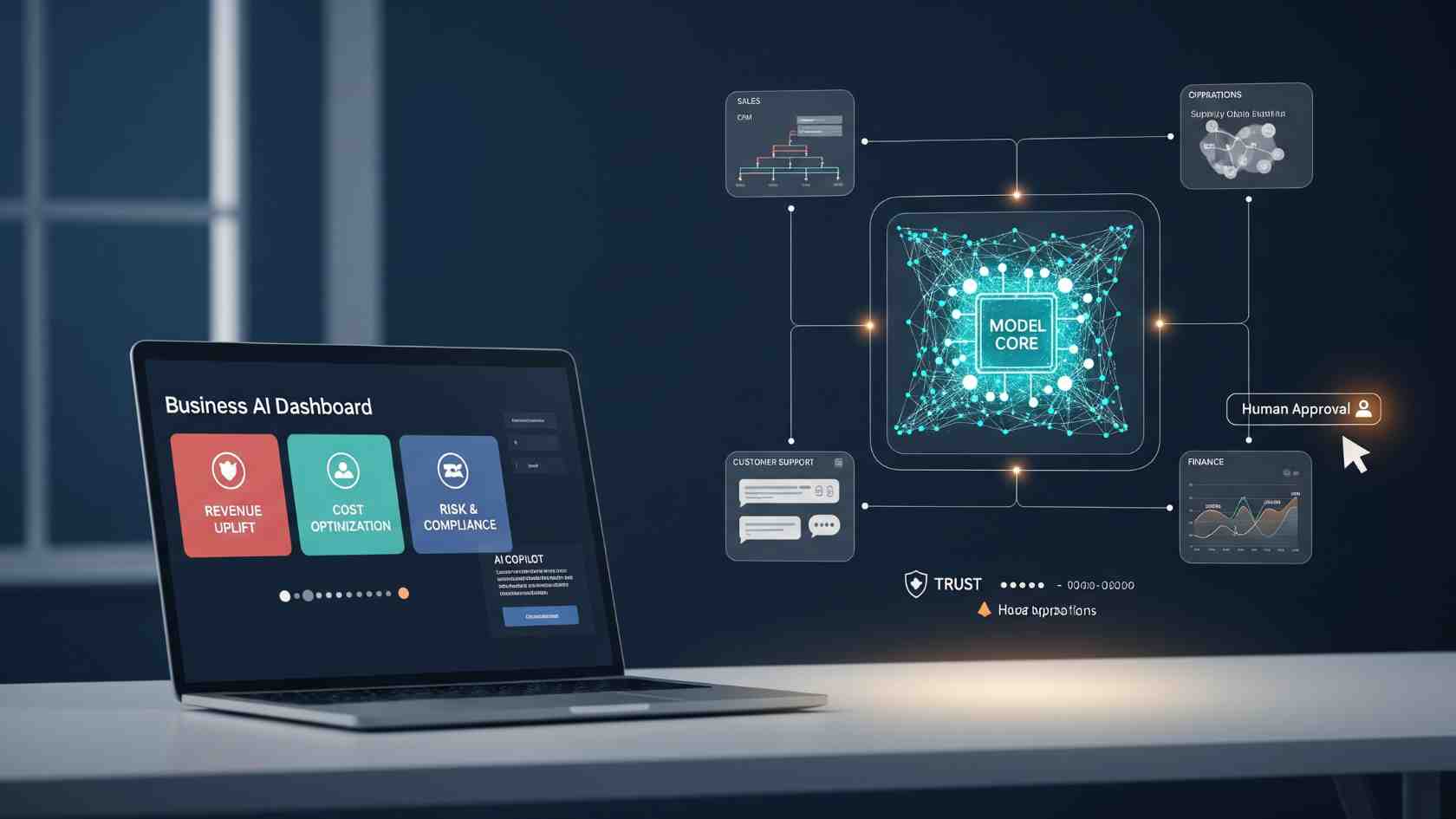
A comprehensive AI strategy will incorporate:
- Data Collection—gathering the right data, i.e., data related to sales, customers, supply chains, etc.
- AI Tools—defining the right platforms for analysis, automation, and customer support.
- Decision Support—meaning using outcomes from AI to make smarter decisions.
- Human Oversight—making sure humans are still involved in the decision in case of errors or bias
An artificial intelligence strategy, if executed well, aligns business objectives with technology. It enables firms to be more nimble and discover new future opportunities.
AI Decision-Making in Action
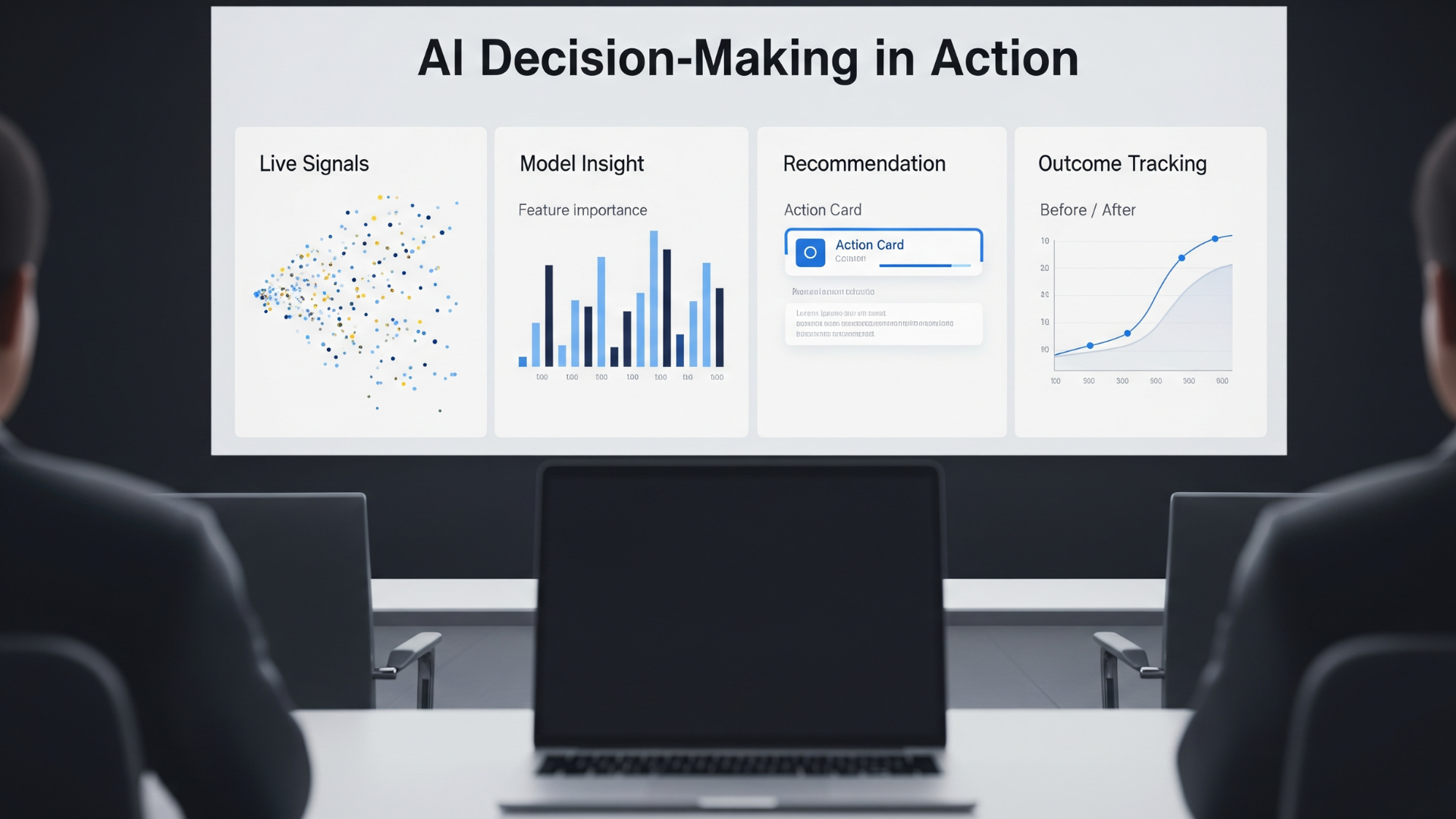
AI decision-making is all about smart systems that support decision activation to help their leaders make the best choices. In 2025, these areas are cases in point:
1. Customer Insights
AI can analyze customer behavior in real time. Businesses understand what customers like, what they searched online up until that point, and when they will most likely make a purchase. Knowing this is crucial to organizations so they can provide customers with the right product at the right time.
2. Financial Planning
AI understands how to forecast sales and expense trends while tracking spending and identifying possible risks. As an example, banks can detect fraud through AI technology within seconds, something humans will struggle to beat.
3. Supply Chain Management
AI tools can recommend when a company will run out of stock or recommend suppliers who are cheaper and offer delivery agility. In all instances, this allows businesses to produce less waste, which saves hard costs.
4. Human Resources
AI decision-making doesn’t have to replace humans, but it can support improving decisions when human resources teams hire employees. Historically, these teams reviewed applicants’ resumes with limited variables. Logs say that today AI can evaluate resumes for skills and even predict the likelihood that a candidate will fit with a company’s culture.
In all four cases, AI does not replace humans; AI acts as a partner to humans and provides an evidence-based decision model.
AI for Startups: A Game Changer
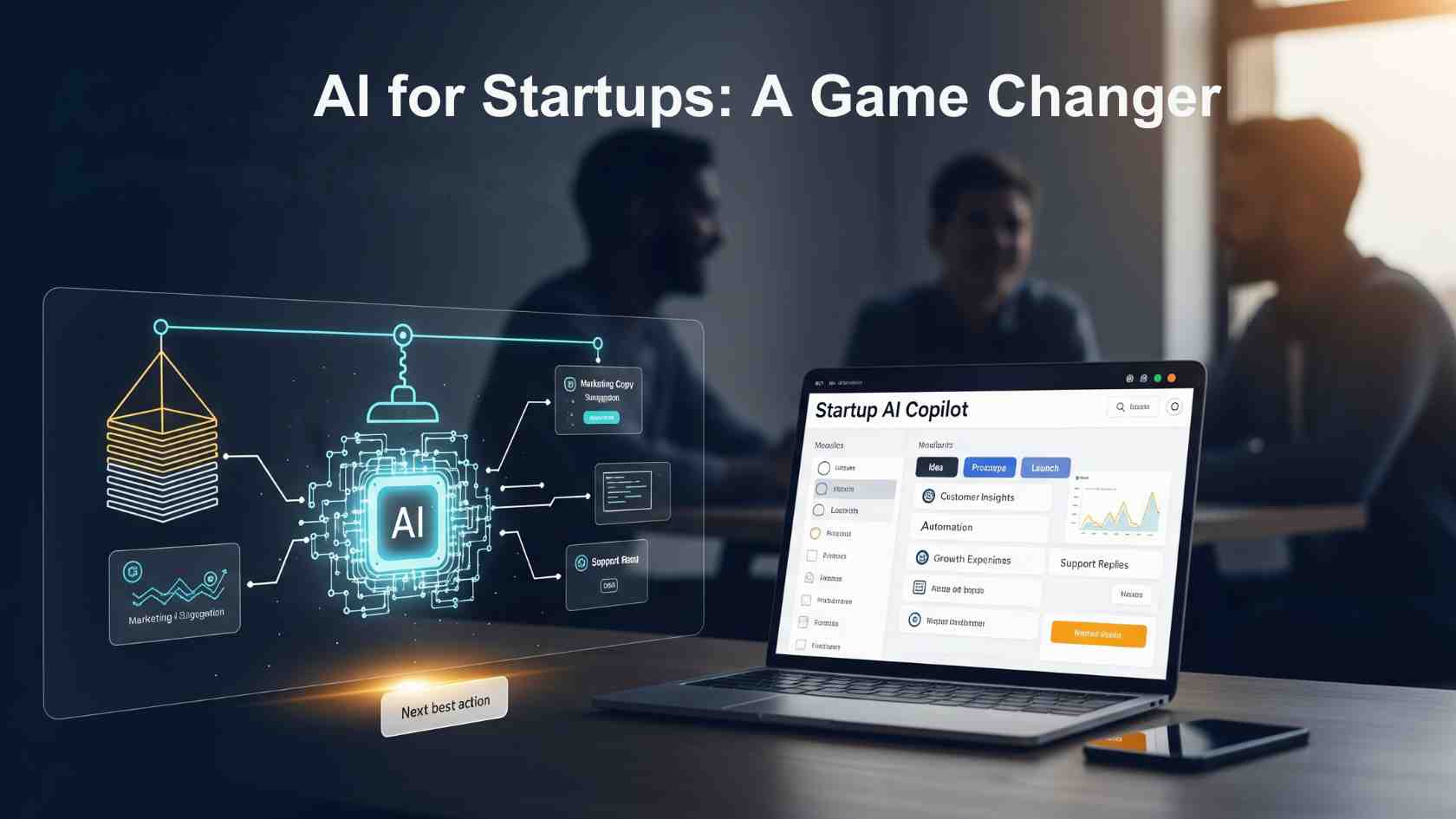
Startups face a unique challenge. They often have “small teams, limited budgets & high competition.” For them, AI is not just useful—it is a lifeline.
Why AI Works for Startups:
- Automation Saves Time—Startups can leverage “AI to automate activities” such as managing emails, providing customer support & preparing invoices.
- Data Insights Build Growth—A startup’s executives can utilize AI to determine what customers want more effectively and efficiently than sending a traditional customer survey and waiting weeks for insightful feedback.
- Cost-Effective Decision Making—Startups can use AI-based third-party tools to eliminate the troublesome trial-and-error methodology, as well as map budgets and execute strategies or capital expenditures with valuable insights as their decision-making advantage.
For example, a getaway & vacation startup can manage inventory, forecast customer demand, and sort and automate scheduling social media postings with AI technology. While the AI manages tedious tasks, it gives the founders more time to build a quality brand.
According to the Harvard Business Review analysis, startups employing AI technology experience product development cycles that are 50% shorter than companies that do not utilize AI technology.
Business Automation with AI
One of AI’s most powerful roles in business is in the area of automation. Business automation means the use of AI tools to perform repetitive tasks entirely without human review.
Some common examples of business automation in 2025 include:
- Chatbots—“AI-powered chatbots”—are available to help customers 24/7.
- Email marketing “AI tools” schedule, send & personalize emails based on customer engagement.
- Accounting—AI tracks expenditures, writes invoices, & sends bank payments automatically.
- Workflow management—AI tools assign tasks, track progress on projects, and send reminders.
Business automation is not just about saving time. It also lowers the chance for humans to make mistakes, helps make more from the work people do, and lets folks put their effort into work that pays off more.
Benefits of AI in Business Decision-Making
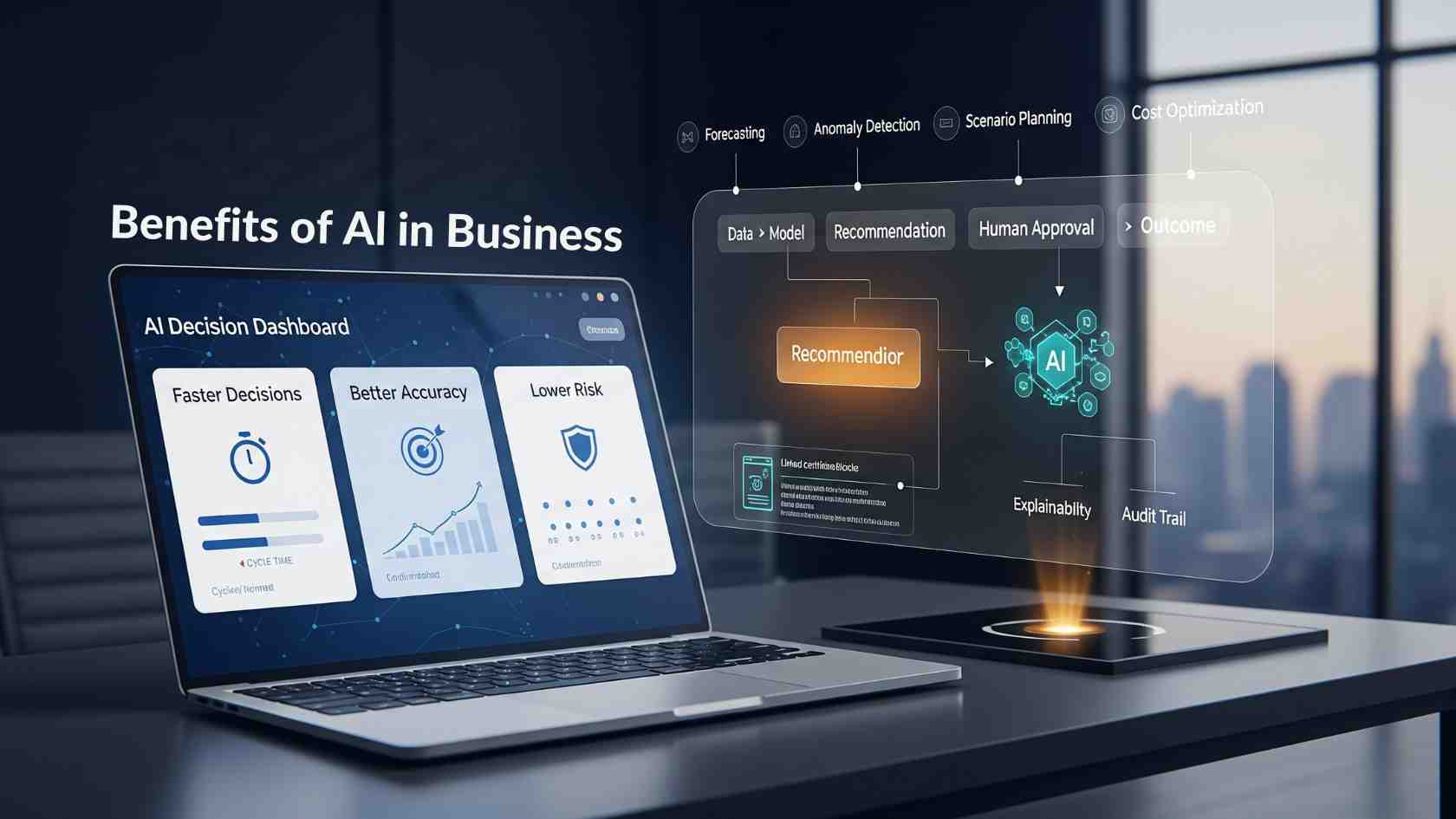
AI is impactful for business because it leads to smarter strategies. Here are a few of the main benefits:
- Quick Decisions—AI takes only seconds to work with data, so even if you are not speeding, you will get there quickly.
- Higher Accuracy—AI only looks at facts, not emotions. So mistakes are more than likely to be cut.
- Budget Savings—AI can’t replace cutting labor costs, but at a minimum, the potential for waste is eliminated.
- Competitive Advantage—If your competitor embraces AI technology, you’d better find a way to beat them.
- Scalability—With advancing AI, systems will provide solid productivity as they keep expanding, allowing flexibility for data systems to grow.
According to McKinsey, businesses that embrace AI in their decision-making processes can increase profitability by as much as 40% in three years.
Challenges of Using AI in Business
AI may hold tremendous promise, but it also has its drawbacks:
- Data Privacy—Businesses must comply with data protection laws governing customer data usage, as well as have a good process for data storage and later usage.
- Bias in AI—If AI is trained on poor data, biased results will occur.
- High Costs—Developing an entire artificial intelligence strategy can be cost-prohibitive for small businesses or start-ups.
- Skills Gap—”Many teams” are still developing their skill sets to benefit from AI tools effectively.
The “smartest companies” recognize these risks & develop strategies to deal with them as they arise. They utilize insights from AI in combination with judgment from “humans to optimize the outcome.”
Future of AI in Business—Smarter Strategies for 2025 & Beyond
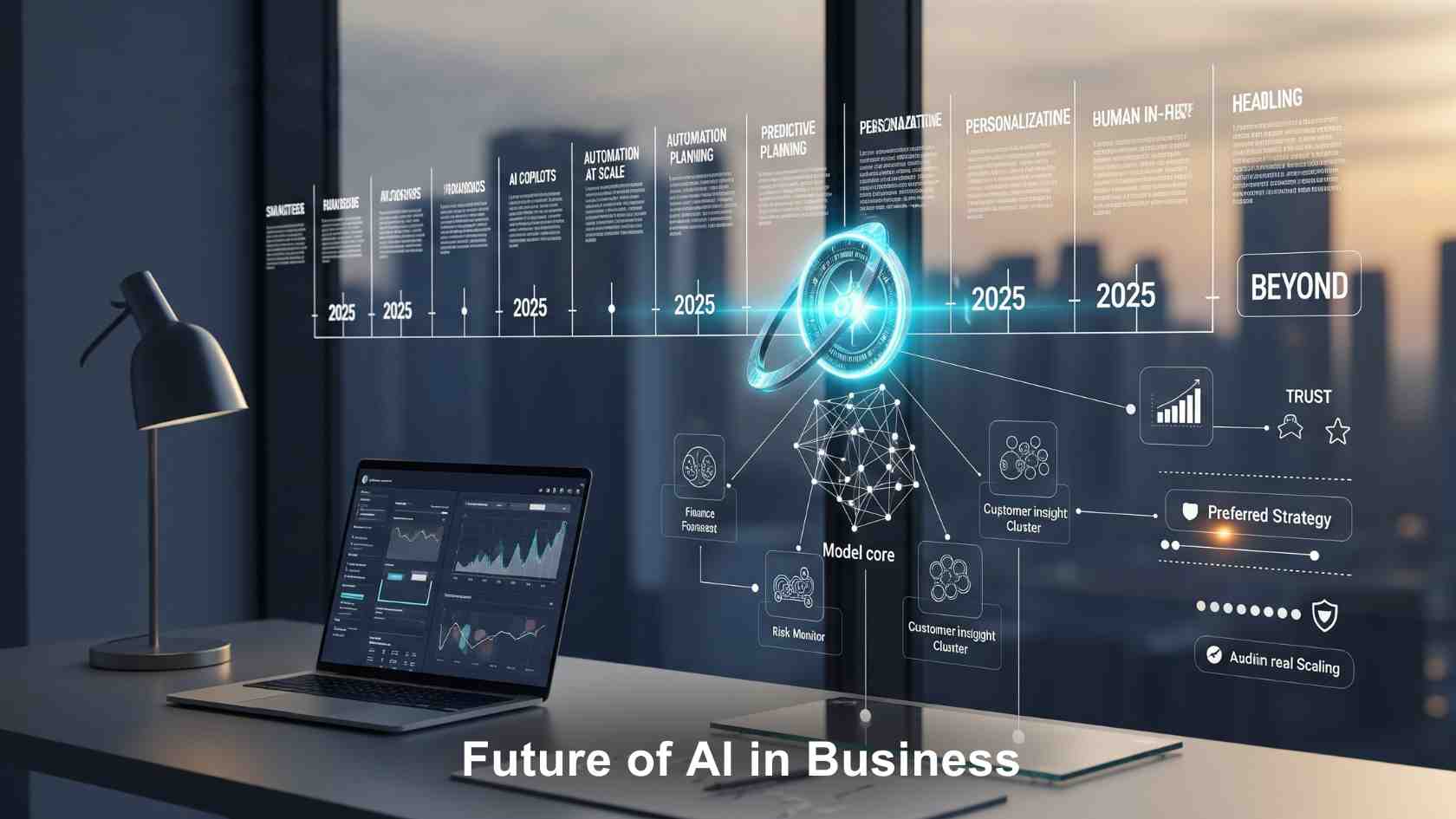
In the future, we will see businesses using AI grow stronger. Here are some important trends we will see:
- AI + Human Teams: Businesses will develop hybrid teams of humans and AI; they won’t be replacing workers with AI.
- Explainable AI: Companies will want “AI systems” that explain how they are making their decisions so that companies know they can trust the AI.
- AI for Sustainability: “Companies” will use AI to reduce waste, reduce energy use & meet green goals.
- AI for Startups at Scale: Small startups will have access to inexpensive cloud services that allow them to leverage advanced AI decision-making tools.
- Personalized Business Automation: Each company will be provided a custom workflow supported through AI that reflects each company’s unique needs.
The “trends outlined here” show that the near future is not only about technology but also about “mixing AI with business objectives” to create smarter, faster & fairer business strategies.
Also Read: 10 Low-Cost Startup Ideas You Can Launch in 2026
Final Thoughts
Companies just can’t pay to not use AI as they make plans. It will be very useful in 2025 for smart plans, faster growth, and to help us not fall behind. Companies that let AI be a part of them, from how they use AI as a plan to AI for making lives easier for a new firm, to how they do lots of work, can see this just as simply: only firms that use AI will be on top; others will just fall behind.
AI will not push people who are in charge to the side; it will help them. With the right data, tools, and plans, firms can close the space between machine ways of work and the way people think. This way makes strong, ready-for-the-future firms that do good during a time when every good choice is worth more than before.